30 Years of PLA: SYHP Hotline Paralegal, Andre Jenkins, Discusses How the Hotline Protects Philly Homeowners
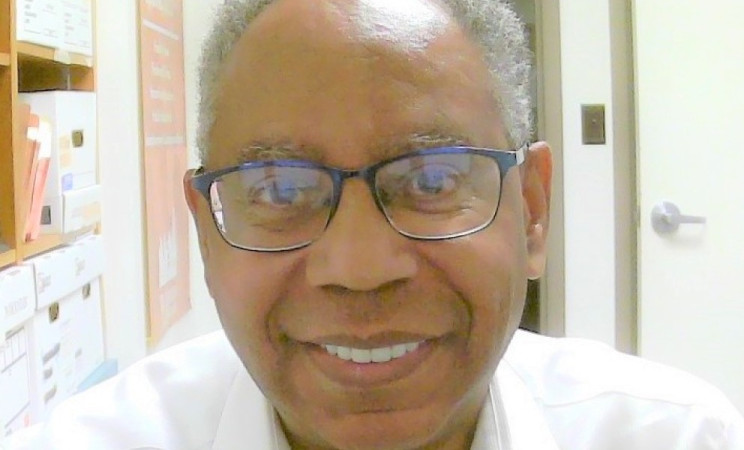
As Philadelphia Legal Assistance marks its 30th anniversary, we are highlighting the work our dedicated staff members do every day to help Philadelphians. For Save Your Home Philly Hotline Paralegal, Andre Jenkins, that work means guiding homeowners through crisis, clarifying complex legal processes, and helping families find a path to stability when they need it most.
Can you tell me about your background and what led you to become a paralegal on the Save Your Home Philly hotline?
I’ve worked in the nonprofit space for decades, first in ministry and then in adult career training and literacy. In 2006, I joined Job Corps, where I worked for close to 12 years in outreach and recruitment.
In 2021, I attended a talk by the Register of Wills and learned that many thousands of homeowners had tangled titles. The process for fixing them sounded daunting, and I realized that residents would need real support navigating it.
In early 2022, after an interruption in my Job Corps work, I was looking for new employment when Philadelphia Legal Assistance advertised an opening on the hotline. The role focused on helping homeowners with tangled titles and related issues. The timing felt right, and fortunately, I was accepted onto the staff.
What does a typical day look like for you when you’re working on the Save Your Home Philly hotline?
Every day is different, but the common thread is that people are calling for help and direction to resolve serious property issues. I spend four or more hours each day speaking with clients, either first-time callers or people following up on existing cases. We discuss documents, court records, appointments with housing counseling agencies, and related matters.
Conversations often include clients sharing details about their lives and relationships that are not always directly relevant to their case. My role is to listen carefully and filter through that information to gather the details needed by the lawyers in the Consumer Housing Unit and the Tangled Title Unit, especially when the property deed is not already in the caller’s name.
One of the best parts of this job is recognizing that I do not have all the answers, and being comfortable telling a client, “I don’t know, but I will ask my supervisor or another staff attorney for help with this complex issue.” Although the hotline focuses on a specific set of homeowner problems, I remind myself that each caller is unique, and I try to lean into their individual circumstances when discussing both their challenges and possible solutions.
What types of situations or legal issues do callers most commonly bring to you?
Callers primarily reach out about mortgage issues, property taxes, or deed-related problems. Some callers are proactive, anticipating a potential problem in the near future, and wanting to prepare legally and financially. Many others, however, are caught off guard by issues tied to the legal status of their property.
For example, I have spoken with numerous heirs who did not realize they would become responsible for their deceased parents’ mortgage or property taxes, even though they now live in the home. Another common tangled title situation involves heirs seeking local assistance with home repairs. Programs like Basic Systems Repair (BSRP) often inform these families that they need the deed in their name and refer them to the Save Your Home Philly hotline for support.
What skills are most important for doing this job well, especially when handling urgent housing situations over the phone?
Being an active listener is very important, since clients may not know what information is most relevant to share so that we can help address the problem. Often, they provide a great deal of information, and my role is to distill what is germane and focus on what we can assist them with.
Jane [Nylund, SYHP Hotline Supervising Attorney] tells me that I have something called executive functioning, meaning I do what needs to get done, so there is that. Consistency is also important, since some cases take many months to reach resolution. I have worked on several that lasted more than a year, with a range of outcomes. Clients appreciate the ongoing calls, feedback, and attention they receive, regardless of whether the outcome is positive.
Maybe it simply comes down to caring, which may not even be a skill. Showing up every day and being present allows me to gradually grasp and retain legal concepts, so I can explain them to clients in ways that are clear and useful.
What are some of the biggest challenges you face when helping homeowners in distress, and how do you manage them?
Above all, managing expectations is one of the biggest challenges. Another is allowing clients the space to share their emotions and vent if they need to. I come from a big family with a broad spectrum of personalities, which helps me navigate these conversations. Most callers are at least anxious, and some are very angry about their situation. There is a wide range of emotions, and I try to remain calm and invite clients to do the same.
Another major challenge is ensuring that they receive competent legal guidance for their specific circumstances. This often means gathering clear details about a client’s resources, family situation, and other relevant factors, and then reassuring them that I will consult with an attorney before advising them on the best course of action. Both the client and I may prefer immediate answers, but if I am unsure, I offer to follow up after consulting with the appropriate staff attorney so that I can provide accurate guidance.
What do you think is most important about the work the Save Your Home Philly hotline does for the community?
I have heard clients say many times that they appreciate the clarity they gain from conversations with the hotline, regardless of which paralegal they speak with. We help resolve many issues related to property taxes, and we reassure mortgage clients that they will receive free support and guidance from both Philadelphia Legal Assistance and their housing counseling agency.
Clients are often relieved to learn that they typically have much more time to address their problems than they initially thought. Whether the issue involves taxes or a mortgage, many callers assume that the Sheriff will arrive to remove them at any moment, which is almost never the case. Being able to provide that reassurance early in the call is one of the most rewarding parts of the work.
How does your role as a paralegal directly affect outcomes for clients trying to keep their homes?
Most clients do not know what steps they need to take to properly address their situation. Going to the right office at City Hall at the right time can be vitally important, and we are the ones guiding them, whether that means filing a petition or an answer, or opening probate. Much of the work involves providing information and procedural guidance.
Ultimately, outcomes are driven by the client’s actions, even in tax cases. I have worked with several hundred people who secured favorable agreements with the City’s Tax Revenue Department because they followed our guidance. We have strong working relationships with legal and other staff there, as well as with the law firms that contract with the tax department. That coordination makes a significant difference for clients, many of whom contact us only days before their property is scheduled for sale.
Can you share a memorable client success story that has stayed with you? What made it meaningful?
Oddly enough, it is hard to choose just one, because successes are part of the daily work of a hotline paralegal. Getting a sheriff sale stayed just days before the scheduled date is something our team regularly experiences, and it never stops feeling meaningful. Helping mortgage clients connect with housing counselors and remain in the court’s Diversion program is another frequent success.
During the PAHAF program, more than 40 of my clients received nearly $1 million in grant funding, and through the Housing Trust Fund, about 20 clients obtained close to $100,000 in assistance. I have also helped roughly 400 clients secure OOPA agreements with the City, many of whom narrowly avoided a sheriff sale. What makes this work meaningful is seeing how access to the right guidance and resources can dramatically change outcomes for families trying to keep their homes.
Is there anything else you want to say about your role in providing legal aid?
I am very happy to be at PLA. It has been a strong fit for me, and I am especially encouraged by the growth of our outreach and education efforts in the community. The more people understand steps they can take, like writing a will, the more they can prevent problems before they start and potentially avoid the need for legal help altogether.